Monday, 5 May 2014

5 Key Questions

Who are the experts of Sleep Deprivation?

Doctors are the experts on Sleep Deprivation, but not all doctors. Some doctors specialise in treating people who have trouble sleeping as well as researching the effects of different sleeping patterns and how the lack of sleep will effect a person in the long or short term. The term used for these doctors would be Sleep Specialist. Sleep specialists are medical doctors who have followed out in doing extra education into the field of sleep medicine. Sleep specialists are trained to stop early sighs of sleep lost before it becomes too damaging that it could cause permeant damage. The fields that they speicalise in are neurology, (the section from biology that focuses on organic disorders of nerves and the nervous system) Plumomology, (the medical treatment for dealing with disease involving the respiratory tract) Internal Medicine and Psychiatry (the study of mental illnesses and abnormal emotional and performative behaviour)
It turns out that the sleep experts do not focus on lack of sleep that problems that happen during sleep but they should still have a very wide knowledge of how lack of sleep effects people. One reason this would be true is that they have to help patients that suffer from a sleeping illness call Insomnia. Insomnia is a term use for people who have a hard time to get to sleep or get the amount of sleep they need to feel fully rested. Insomnia is the root of the disorder as there are multiple types of insomnia from having insomnia due to drugs and products that keep people awake, to having insomnia due to mental reasons that are not a choice. Because they would have a vast knowledge of helping people who have a lack of sleep they would know the risks and know how to fix them.

Why do we need Sleep?

The short answer to this question is to restore energy by resting and allowing our bodies to recover from a day of constant work. But the reason that the body cannot recharge while awake as efficiently is because the brain is much more active while awake. This is not proven but is the most agreeable reason why we need sleep. No scientist has giving a solid reason for sleep but we do know what happens without sleep and what benefits we get from sleep, such as being more alert, more athletic and the brain works more efficiently, making us smarter. Some experts has made theories to why we need sleep and have been labeled as so.
Inactivity Theory- This theory is one of the oldest theories of sleep that suggests that the reason animals sleep during the night time and why we do is primal to stay out of harms way when we are most venerable (in the dark) This theory does not fit into todays society as we sleep in places we know we are safe there for sleeping to keep silent and motionless to make predators not notice us is mostly disproved.
The next theory is the Energy Conservation Theory, one of the more logical theories. This theory states that people and animals sleep due to reserving the energy the gain from eating and drinking, taking up less energy would allow them to have more chance to live longer. This is said to be less apparent to developed countries but in polity it would make more sense as they would have limited livestock with food therefor sleeping will use less energy than if they were awake, saving the little energy consumption they have.
The third theory is called the Restorative Theory. This theory believes that we sleep to restore ourselves from what we had lost during the period of time we where awake. This theory does not specify on how we restore as this is still unknown but it is believed that by sleeping in some way the body repairs itself quicker than awake due to the rest that reduces our bodes actions against itself drastically.
The final reason for sleep in a cognitive idea called the Brain Plasticity theory. This theory focuses on the brain and believe that by sleeping it changes the organisation of the brain. This organisation is know as Brain Plasticity. The concept is still not fully understood but studies show that that during sleep the brains patterning changing and could help us understand why we need sleep. The parts of the brain that focus on learning and manual tasks seem to enhance after sleep has occurred making them more equipped for a days work.
In a overview of all the different theories behind sleep there is no solid answer to the question but the ideas can be combined to give a overall view of what sleep does to us and why we may need it during different situations.

What studies have been carried out already about Sleep Deprivation?

There has been several famous studies and personal challages and test to see how long people can stay up without going to sleep.
Peter Tripp during the experiment
 The first one is about a radio reporter called peter Tripp who sat in town square for 201hours and 10minites in a glass performing a radio show. At first he was fine and when he started to doze off the nurses and doctors would shake him to wake him up and interact with him to keep him occupied. After a few days he started to hallucinate, seeing mice and kittens that were not actually there. The last 66 hours of the experiment they doctors had to keep him on drugs to keep him from falling asleep. This experiment did massive damage to his well being during and after the test as later on in his carrier he admits that he blames for the 1960's payola scandal as he had never felt quite right since he did the study.

Counteracting this tragic radio attempt of sleep deprivation, a world record holder in 1965 stayed awake for the incredible time of 11night without any resting. This was done by a school boy called Randy Gradner, age 17. During the time he stayed awake he reported as well as the scientist studying him that he began to have slurred speech, blurred vision and mild paranoia. He became weary of the scientist and thought that they thought he was stupid. Once the study was over he only made up for 11hours of lost sleep out of the 90hours he lost. He did not seem to show any side effects after the experiment that questioned the effects of sleep deprivation.
Overall during the studies the short term effects are clearly shown and become horrific but can be fixed in the long term if the person is able to get the sleep they need in the time they can withstand. Pushing over someones personal limits could cause massive long term damage that could rewin someones life, just like Peter Tripp.

What effects does lack of sleep have during Sleep Deprivation? (short term effects)

There are many different symptoms of sleep deprivation that varies depended on the length the person has be deprived of sleep. The lack of sleep has been shown to effect people in physical, metal and emotional level. A quote from Sleepio.com states, "In fact, 88% poor sleepers struggled with reduced energy compared to only 29% 'good' sleepers." This means that the lack of sleep will give you a reduced level in energy that is needed to function the body. The main short term effects are as listed, Anxiety, Drowsiness that can lead to drowsy driving, Forgetfulness, Distractibility making it hard to focus on any given task, Decreased performance and alertness meaning the reaction time is decreased dramatically, Memory and cognitive impairment and Stressed relationships making your emotions get the better of you and more cranky over little things that would usually not be a big deal.

What effects happen after going though Sleep Deprivation? (Long term effects)

The average person can go without sleep for approximately 48hours before it becomes dangerous to a persons health. But soon after the 48hour mark small effects could start that leads on to long term effect the could permanently effect the persons well being. Metal and physical effects can become long term and even create effects that will not be noticeable until much later in life. The most common side effects and the most noticeable side effects are the following. High blood pressure, higher rate of having a Heart attack, a higher chance of having a Stroke during the persons lifetime, Obesity due to eating more from being awake and having a higher metabolism, Psychiatric problems, including depression and other mood disorders, unstable sleeping pattens and overall a Poor quality of life.

How the research as help me in developing my documentary.

The first question i searched information for is who are the experts of sleep deprivation. The results of this question led me to what i though would be the answer but i found out that it specifies on what type of doctor instead of all doctors. This will allow me to try find and interview the sleep specialist doctors instead, giving me a more reliable, trustworthy and legitimate answer to for the start of my documentary where i would tell them about my experiment and they can give me professional feedback and comments that i should take in consideration, this would be recommendation on when i should stop. Also knowing what fields of research they specialise in will give me more understanding on what they will discuss with me during the interview so i don't seem clueless when it comes to them giving me advice. Overall all i really needed from is research was to know who the expert was and i found that out as well as extra information on what they specialise in and what types of treatment they give to different types of problems like insomnia. This question therefore reached my target for the answer as well as giving me useful information that i can use during an interview with a expert. From finding out why we need sleep i did not get any solid answer that is quite annoying but i did find out a lot of theories experts have about why we need sleep and what sleep gives us. The information itself is fairly useful and will help me once again explain during the documentary why sleep is important and what aspects of the behaviour of the participants in my own study will be effected and why. This information links all of the different theories together as well as helping understand some of the side effects i had researched in the later questions. An example of this is with short term effects of needing to eat more and gaining weight this way would be to do with the Energy Conservation Theory where sleeping preserves the eaten food as it doesn't burn off as fast during the period of time you are asleep. Studies have not really given a solid answer to what could happen during my study that i personally think is  good sign as the results are unpredictable but i am aware of the dangers of the test and the limits i should discontinue the test.


List of Sources used to find information:

  • http://www.sleepio.com/articles/sleep-science/sleep-deprivation-symptoms/
  • http://articles.chicagotribune.com/2013-03-27/health/ct-x-0327-expert-sleep-20130327_1_deprivation-sleep-associates-nightmares-and-night-terrors
  • http://www.healthcommunities.com/sleep-disorders/what-is-a-sleep-specialist.shtml
  • http://www.webmd.com/sleep-disorders/excessive-sleepiness-10/10-results-sleep-loss
  • http://www.health.com/health/gallery/0,,20460833,00.html#
  • http://www.pamf.org/sleep/about/healtheffects.html
  • http://www.huffingtonpost.com/2014/01/08/sleep-deprivation_n_4557142.html
  • http://psychology4a.com/sleep8.htm
  • http://wyrk.com/how-long-can-you-go-without-sleep-before-its-fatal/
  • http://healthysleep.med.harvard.edu/healthy/matters/benefits-of-sleep/why-do-we-sleep

Tuesday, 29 April 2014

Monday, 21 April 2014

Nicholis Modes

Bill Nichols said that there where 5 different modes that documentary's fall under. The list bellow are the 5 modes:

  • expository
  • observational
  • participation
  • performative
  • reflective

Realism

Realism is how the documentary presents the truth though real footage, trustworthy sources and multiple other ways. The main purpose of having realism in a documentary is to make the audience believe and trust the presenter with the information they are presenting. With more realism the more likely the documentary will be positively viewed on and in some cases more groundbreaking to hear. Realism focus on facts instead of theories, and realism is how legit the footage actually is. If it is staged footage it is not real therefore little or no realism. If it actual footage it is realism as the events are events that actually happened in real life.

Dramatisation

Dramatisation is the amplification of the documentary or how the documentary uses its conventions to engage the audience into watching the documentary. The most common way this is used is though music and camera language as the more engaging the documentary is, the more Dramatisation it most likely has. Dramatisation often is used by over emphasising topics and situation with either the presenter vocal tone, special effects or music. Dramatisation does not focus on facts and is used to make the documentary more entertaining instead of truthful.

Narrativisation 

Narrativisation is how the documentary is laid out. This involves the different techniques such as interviews achieve footage and cut aways. Narrativisation would tell the story of the topic. Narrativisation follows the plot of the story with the help of the techniques, using the interviews with expects to explain the story as they go along. Not all narratives are told in chronological order so some documentaries have a hard to follow narrativisation than others. The narrativisation is depended on how easy the story is to follow.


The Expository Mode (Voice of God)

Expository Mode is what is most commonly identified and noted type of documentary. These documentary are what people often think of asked what a documentary is. Expository Mode consists of voice overs over relevant footage . Usually the presenter is not seen and the only contact you get from them is the voice overs.
The presenter uses argumentative logic and often uses a narrative to make the voice over of the documentary feel more engaging and understanding. Most of the time this mode is used in Wildlife Documentary and News reports. They focus on fact instead of opinion, but can push the audience in one direction of perception.


The BBC Wildlife Documentary, "White falcon & White Wolf" is great example of a expository documentary. Firstly the camera language is used semi-professionally. This is due to action packed scenes where the camera has to move suddenly and unpredictably to capture the unique and interesting scene. This is shown clearly at 37:20. As the Wolf departs from the water, the wolfs start to play and run around, the camera, although still tying to keep the footage looking professional, decreases in quality sightly as the sudden even was unpredictable and could be improvised when filming the scene. This displays realism due to the clear representation of unpredictable situations happening where improvisation would have to take place. This is detected by audience as reliable and truthful information because by using real footage of an event that is clearly shown that it is not staged, makes the footage undeniable and not debatable as the fact of the matter is shown. The whole documentary contains actual footage, once again creating a huge amount realism to the documentary. By using actual footage the documentary becomes unquestionable due to the footage being a real event that has happened. The audience cannot argue with what they see therefor can obtain a large amount of information in the documentary because the facts are believable when spoken and the footage backs up the narration.

To keep the documentary engaging to the audience the documentary follows a narrative with the voice over telling the story as the footage sets the scene. This documentary is no exception to this technique as it follows two story's. One about a small pack of white wolfs and the other story about a white falcon looking after it family. By having intriguers where the stories interlink to cross over allows both stories to be told informatively and smoothly, the Expository documentary is controlled and especially in this case really makes it look and feel like a higher, all knowing person is doing the voice over, (Voice of God).

Simon Poland is the narrator to this documentary and partly to do with why the documentary is so dramatic. Simon Poland has a clear smooth and strong voice, but it is not intimidating. By using Poland the documentary has a passionate and deeply informal tone. At 29:49 Poland narrates about how unusual it is for a falcon to tear the pray into smaller portions. You can hear in his voice that he has a very profound tone and clearly emphasises on specific words and phrases to create the impact of drama. A good like where the emphasises is at 3:02, after stating that the food is still weighing her down, he adds a dramatic pause before saying "She's exhausted." This would have been clear to the audience without him stating the second sentence, but it is added to elaborate on the occurrence.  The music is also a big role how dramatisation is incorporated into the documentary. At 29:49 orchestral music is playing. The slowly played instruments really impact the situation, making the bird look more elegant and strong as well as later on, at 30:20, when it reachers the point of the falcon being on stuck on the ground whilst having staving chicks in the nest, makes the situation more dramatic and threatening. 


The Observational Mode (Window on the World)

Observational mode is documentary's where the producer does not get involved at all with the documentary's plot/story by using such techniques as hidden cameras, undercover camera crew and most importantly the produces do the give an opinion. Observational documentary's key aim is to keep the presentation neutral and unbiased. As it is an observation, the producers have no control over what could happen though the documentary story and keep distances from the actual event to prevent corrupting the results of the narrative. The producer is displayed as a bystander who is like a fly on the wall.


Frederick Wiseman 1970 documentary called 'Hospital' is an Observational  documentary where the presenter enters the environment of a hospital, but does not interfere or effect how the scenes are created or shown. Having this highly limited power of good footage the clip has multiple plot lines that change depending on how interesting and practical the situation is to film. Until 2:20 the  documentary does not focus on one patent in the hospital but suddenly decides to keep with the same patent for the rest of the clip. This is purely for Dramatisation. By jumping around until they find an interesting and solid story the narrative is sacrificed to make the documentary more engaging for the viewer. The amount of drama used in this documentary is contained inside the realism of the documentary as the impact of knowing that the scenario shown though out the video are real sick people, the core emotion of knowing someone when though the experience. A good example of this is at 9:30, the man is was sick and then starts to panic screaming, "I don't want to die!". Knowing that he must have been extremely scared and worried about his own being would create a compassionate emotion to the audience for this charter, good or bad. Because the presenter does not speak a word in this documentary it completely cuts out directors bias as well as any bias. Observation lets the audience completely make their own opinion on the situation. By having no input on the outcome of the documentary it suffers having little Dramatisation and grabs it when the opportunity approaches itself, and that why the suck with the same character at 2:20.

The Realism of the documentary is clearly shown though out the entire documentary as all the footage is hand held and people occasionally get in the way, proving that it is not staged as if it was staged the footage. If the camera use professional camera language then the impact of the situation would still be taken seriously, but the reliability of the documentary would be questioned due to it looking staged a little. A clear example of this would be where the doctors get in fount of the camera to help sort out the man sitting down at 0:14, the man become hard to see as the cameraman tries to move in 0:18. The bad footage is made up in the realism of the documentary as it has a bigger impact on the viewer as they are certain the information they are collecting is true and the presenter is not getting involved, cancelling out the theory that the presenter could influence the opinion of the audience to the topic.

Narrativisation is used in the documentary by just watching the observation in order. This gives the audience a sense of realism and easy to follow where the story is. the impact is very minor as having the story just follow the tape of the recording the footage can have it boring and dull parts where the audience and not make out much of what is happening. This is quite a big issue in most observational shows and therefore has realism as it biggest asset.


The Participatory Mode (Interactive Mode)

This Mode is where the presenter puts themselves into the story by interacting with the subject of the story. This is not the case if the presenter is the main subject of the story, that would be the Performative mode. Participatory mode would involve the presenter interacting with the subject, possibly convincing them to change their initial action or thought to benefit or oppose the presenters view. This Mode is the polar opposite to the observational mode as the documentary could be viewed it a much more bias way or infact being false, braking the realism of the story. But it does not always mean that the reliability of the story will be damaged as the presenter could be the host and be asking questions to the subject to help the topic progress.

Catfish is a TV documentary series where two men help someone who is dating online find out who the person on the other side of the computer. The presenter made the show due to his own experience with cyber dating and wanted to help others, therefore during the show he interacts with the main subject but is not the main subject himself. By interacting with the main person, shown at 5:55, to get the story out of him. He does not interfere in the story but pushes it along to get the main persons story to be revealed as it is about them finding out about the other person they having been dating. Having hand held cameras and seeing the production crew in some shots really helps make the documentary feel real and trustworthy as all the events do not look scripted and at 24:13 you can see the production crew behind the main characters. This really adds to the realism to the situation. Usually you would hind cameras due to making it look professional but by showing them it proves it is reality. Another example of realism in the documentary is the sound quality shown in the same part of the clip, 24:13, the audio has static in the background where people are moving around and it is hard to hear the conversation sometimes. This proves the cast was not fully aware of what was going to happen and how to react all the time, proving it is the truth and reliable.

The narrative is shown in chronological order starting with when the crew met the person in need of finding out who the other person is, to the end where they meet and find out if they were who they said they were. The story is told though a video log style of presenting where they record the footage as they do each step of research, traveling and discussions. This gives the narrative a down to earth emotion and makes the topic feel more human. Narrativisation of the documentary is shown to step by step instead of showing all the key facts at once. this creates build up of tension about the story and increases the amount of dramatisation used.

The dramatisation is created though the use of build up. The build up is each piece of information they collect about the other person, like at 12:25, adding up until they reach the conclusion of who the person really is right at the end of the documentary. Another build up method they use during the documentary to create drama is the background music. At 17:48 they use low toned music to add to the investigation tone they have set during the scene, they keep asking questions as the music plays adding tension to what the answer could be. The low tone keeps the topic serious at the same time making the situations seriousness amplified. 

The Performative Mode (Filmmaker as participant)

Performative Mode is where the presenter is the main subject in the documentary. The documentary will be based around them and the how they experience the topic of the story. This could convey bias towards the side of the presenter as they are the main person who is in the documentary. The topic of the story could be anything but for it to be in the performative mode it would have to focus on the presenters participation in the topic. With the correct presenters this could uncover very interesting and groundbreaking, but with the bias and bad presenters it can lead to untrustworthy and questionable information. Performative it mainly based on realism and how much the presenter uncovers on the topic by putting themselves in the situation.

The Catfish movie is about the presenters story how he met the girl he was dating though the internet. It is an independent film following the narrative of how he met her. This was recorded in a Video Log (Vlog) style where they track each event and moment. This makes a very clear narrative, knowing the order of the story is directly chronological from start to finish. an example of the Video loging technique that the cast used is showed at 27:09 where you can see the presenter is being filmed during the process of researching about "Abby" The realism of the situation is brought though the Vlogs as the camera work is very unprofessional and clearly is hand held and improvised. This would guarantee the footage is real and is not staged as parts of the convocation have pauses and other factors that make the situation just seem common and real. Narrativisation and Realism are the powerful effects that performative mode presents but the dramatisation can only be added though the emotional power the realism reveals.

The most powerful realism part of the documentary could be that it is based around the filmmaker. This gives a true story for what the presenter is experiencing and portraying but at the same time runs the risk of bias towards the presenter. Fortunately in this example the presenter is shown to be non-bias as he interviews the woman who had lied about who she was to him for 8 months, allowing both sides of the story to be heard. At 1:07:46 you get to here a discussion between the presenter and the woman and why she did everything she did and what she thought of it all. This presents bias as whilst keeping the realism intact.

Dramatisation would only be perceived in this documentary though the experience of the story. Due to the documentary taking until 1 hour and 5 minutes in to tell us who the woman was it creates a huge build up of mystery of how they found her and why she did everything she did, even though she had a husband with kids. The music helps a very little amount to build up the atmosphere of the situations but defiantly does have some effect. At 1:21:30 the presenter is taking a box into an office that the woman had left for him, the music has a slow tempo and uses a piano. This creates a sad tone, but because of the high notes of the keys it gives a sense of completion to the story, that they had reached there goal even though it had been a sad moment for him. The Dramatisation emphasises the realism and narrative of the documentary.

The Reflexive Mode (Awareness of the process)

The Reflexive mode is the term used for documentaries that acknowledge their process of creating the documentary, as well as explaining in which way they are presenting the information on the subject. This means that they will admit to the audience that they are using a bias view of the subject to investigate that specific side of the story. But although they limit the information by only using a section of a larger subject, they keep the contract with the viewer, therefore it emits realism due to honesty of the producer  to the audience if they are being bias. Reflexive Mode documentary's usually consist of an investigation plot to find out information about a source that is quite unknown, they state the points where they had limited access. This would be where the dramatisation and narrativisation comes in equation as the idea of having an investigation story plot would create a lot of drama from the conflict of access and privacy. The narrativisation would be the progression of the investigation and would end with a summary of what they have obtained from the creation of the documentary. To reflect upon the documentary process is using the Reflexive Mode. They look back at their actions and admit to what actions they had taken forth.


Educating North Korea is a very sensitive topic at the time this was filmed therefore would contain a lot of restrictions for what could be filmed and multiple rules the producers had to follow while creating the documentary. Privacy vs Access commonly fall into the reflective mode as the presenter would often admit to the limitation and explain how they had to create the documentary. Having the limitations of filming would give the documentary a sudden hit of realism as the presenter would like to get information but is not grated access. Usually limitations are not shown in documentaries, giving the audience a possible thought that the situation could have been staged. At 23:46 the presenter admits that the authority asked them to film the next part of the footage shown, to demonstrate they accept all religions. By admitting why they filmed the upcoming scene, they make the documentary a reflective and more trustworthy story. Once again at 20:36 they presenter states they where forbidden to go inside the building, limiting their information but reminds the audience that the experience the presenter went though is real and true. The camera language too varies from professional and hand held with zoom. This is due once again to restrictions and that they could be asked to leave at any given time. Realism is the biggest impact that the Reflective mode has.

Dramatisation is hardly used if not at all through the documentary because they are trying to keep the documentary serious and factual, during setting the scene's and voice overs their is music that could of impacted the message given but does not really give a clear message other than helping narrativisation by setting the scene, shown at 18:19. The music keeps the documentary from being dull.

Narrativisation is used simply by referring back to how long they have been their, that tell the audience at the start they had been invited for a 10 day stay and the order in which the documentary is shown is the weeks stay. This is clearly reminded at 22:50. The flow of information is quite random but covers the same topic, how the school is run and what it is like in the country. At 6:00- 6:30 the presenter explains to the audience the rules of the documentary, that he can interview students and that living conditions are off limits. This explains that the narrative will be focused on the students life in the school instead of north Korea in general.

Tuesday, 11 March 2014

Conventions of a New Package


Conventions of a New Package

News Package

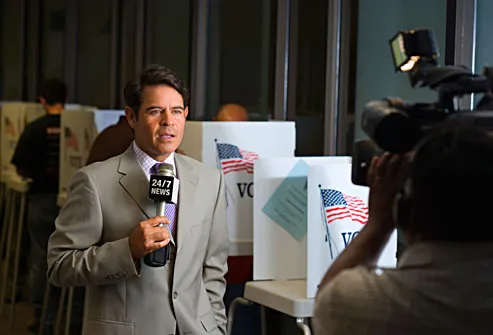
A news package is the what is used on the news when they cut away from the studio, this is mainly reports that are located off site where the new is happening, this many conventions become a big part off a news package as they all follow simular trates.New packages are the main way new broardcasters deliver long storys in depth. A new package would be filmed with a completely differant crew due to the location not being in the studio with the main anchor, this would suggest that if it live or pre-recored that the news package is a VT to give the audience a more indepth knowlage of the subject being mention.


Field Reporter

The Field Reporter is the main anchor of the news package. He/She is the person who delivers the news to the audience, ususally the field reporter would be apart of the situation themselfs or they are an expert in the field they are reporting. Their costume, location and tone of voice would change depending on there field so that they look the part for the job. The reason they use this convention for News packages is because it is the most effective and interactive way of giving the infomation to the audience. By providing them with a knowladgeable, formal and clearly spoken narrator to the story it will convice the audience to trust the report as well as making them more engaged and interested in the story they are presenting.


Link to Studio

Link to Stdio is are the moments in a new report where the Field Reporter will interact with the studio. This focuses on the camera language of the reporter and how they feed the footage back to the studio to put on air. Ususally during a Live Report the Field Reporter will uses links to studio to discuss the situation they are in and awnser any infomation that the studio wants them to report. The key aspects of the convention is where and how do they uses the camera to capture the best footage for their story. The reason they use Link to studio is to give the audience a clear vision of the situation by showing them though the camera lauage or to tell the Field Reporter the infomation they need to report by asking them questions from the studio, giving the audience the requested knowledge.

Mode of Address to Viewer

Every News package uses a certain Mode of Adress to the viewers to delive the infomation most effectively and proffesionally. The mode of adress would change depending on the story as they audience would vairy and the reporters language would have to directed to the target audience. For example if the news package was about Football it would be less formal than a news package on politics. The reporter changes their aproch to the story to suit the audience and story the best. This would effect the accent of the reporter, languange complexity and if they where a fact provider, a person who delivers the facts of the story and is not involved much, or a Analysising Expert, a person who specialises the the reports field and is most likely to be impacted and involved with the story they are reporting, this would have more opinions and prodiction that the fact provider as they would know a lot about the topic therfor making them a fairly reliable source for prodictions as well as facts.


Interviewing Experts and Witnesses

During News packages it is common for a few interviewers with either a eye witness, effected citizen or a Expert of a section of the story to take place. They often stitch together the useful information from the interviews to produce what is actually shown on a new report. The reason why they only take a selective amount of information from the interviewers is for multiple reasons. Firstly not all the information is relevant for the story and the news would want to cut to the point without waisting time with unnecessary information. The second reason they only take a small amount of a long interview is to keep the audience engaged with the story as they would most likely lose focus on the screen, and same person was talking to them for 15 minutes about the same part of the story. raphics are use in interviews to label the interviewee relevant to their role in the story, giving the audience a clear identification on the individual who is being interviewed.   

Report Structure 

The report structure is how the report is ordered, displayed and what is contained within the report. This would include a sign in and sign out, which is when the field reporter states who they are and what the story is about, or concluding the story with the possibility of a prediction, if an expert. throughout the report a numerous amount of interviewers with and archive footage will be used to explain the story that is being reported, they use these conventions because it gives the audience a reliable and wide range of footage to believe in and find reliable. They use graphics, voice over and interviewers to put across the majority of facts during the report and use multiple summaries of subsections of the report to come to a understand of each section. Cut aways and noddies are used to brake up interviews and stitch parts of interviews together so they don't jump unprofessionally. The amount of time the presenter is on camera will vary depending on the type of report as some more dramatic and serious story would most likely need more archive and actual footage.

Actuality Footage

Actuality Footage is the footage that is taken live from an event, most of the time this would be recorded by unprofessional people who are bystanders of the situation. The quality of the footage usually lacks techniques and clearly is not done by a news team. This strangely is a positive for news stations as it has a huge effect on the way the audience reacts when a tragic story is being reported. This is because it allows the audience to feel more involved and close to the story itself even if their own lives has not been effect by it. By creating a deeper emotional impact towards the audience the news station would be able to make bigger situations more dramatic and meaningful. Another reason they use actuality footage is because it is literally impossible to capture the footage themselves. Because of spontaneous moments only people who where at the location of the situation when it happened, would be the only people who could have a chance to record it, making impossible footage obtainable to show to the mass public.


Example 1:

Field Reporters

In this news package, there is not much footage where the field reporter is shown. This is mainly due to the tragedy of the situation, and therefore footage of the event would be more important to capture for an early report on the disaster. But the field report still follows the conventions typically used. There is one field report during the full news package, shown at 4:12 to 4:35, where the reporter stands in front of a crowd of people who are trying to get a bus home during the destruction. They use this background as it is completely relevant for what he is reporting. A field reporter would usually contain the topic of the news behind them, as he was talking about how the people are stuck due to delays and cancelations of trains and buses. Behind him, you see many people stuck around a bus stop and a train station when panned right at 4:25. The reason the background reflexes the story is so that it has more of a direct impact onto the audience and emphasises more on what is being said, when the report speaks about the train being suspended at 4:23, the camera pans to the train station with the reporter shortly following back in to place of the camera with the new backdrop it sight, giving the reality of the situation due to visible proof. The reporter is dressed suited for the situation. He is wearing a shirt and trousers like the majority of news reporters wear, showing that he is suitable to deliver information to the audience. The major difference about him to anchors in the studio is that he is wearing a puffer jacket. The reason for this is to make him best suited for the environment for his own safety and comfort. Because it is the middle of the night, clearly shown at 4:17 with the night sky in the top left side of the screen, it would be very cold outside, therefore he would need to wear a coat to keep warm. No graphics where used to introduce the field reporter as it was not a major concern of the time due the urgency of story, but the woman who does the voice over introduces him before he is shown on screen at 4:06. The reporter seems rather detached from the story even though they are located in the event. This is because of his mode of address. He is clearly from a British heritage and is a white middle class man. He does not look exactly fit in with the rest of the population there, as they are Japanese citizens. This would not majorly effect the report's strength and would possibly improve the quality to some degree, as it would be an unbiased report due to the reporter not having any personal connection to the disaster.

Link to studio

The communication between the anchor in the audio and the field reporter is made though the use of being signed on with a description of what the field reporter is about to talk about. At 4:06 the anchor in the studio who is doing the voice over says, " The BBC's Tokyo's correspondent, Roland Buerk, witnessed their desperation." This allows the audience to understand what the field reporter is about to talk about, which is clearly the desperation of the citizens during the disaster. Most commonly the footage in a link to studio would be live but in some cases this is not possible, such as this one. the reason they use live footage is so the studio can ask the reporter on show about the situation as the News station deems fit. but because of the sudden event, the footage had to be filmed ever so slightly ahead to allow real time footage of in the location the problem was happening. They put the reporter in the crowd of Tokyo so that the realism of the situation would be put across to the audience in a much more direct way, instead of just hearing the news. While the report went on the camera remained as a long mid shot, where the camera shows the reporter body from the head down to the waist. This is done deliberately so that the audience and witness all the major expression the reporter may use, such as hand gestures and facial expressions. The link to studio segments are often rather short due to them cutting straight to the point of the story, giving the news more time to expand on the rest of the story, the video above's link to studio only lasts a total of 23 seconds between 4:12 and 4:35.

Mode of Address to Viewer

The mode of address from the presenter is critical to how effective the new report will be. As this is a BBC new report the presenter has to have a clear British tone of voice with well spoken english, preferably a accent that is not directed at a specific part of Britain. The reason of the presenter had to have this tone of voice, even though the report is about Japan, is because the audience watching the report would be from a british heritage, making it easier for the viewer to understand what the presenter is saying, as well as making it more relatable for the viewer to the presenter. At 0:55 the presenter uses simple language complexity. The reason the presenter uses such simple words such as shook and trapped, is because the story is a very serious topic, making it a priority to give the audience a good knowledge of the situation. The presenter on this report is only a fact provider, therefore making her less connected to the story herself, boosting the chance that she will not be bias because she has no personal connect to the disaster. She is shown as a fact provide though the whole of the report, such as at 1:36 where the building is consumed by the tsunami, the presenter literally reporting what is being shown on the screen. This is because the report must be simple so the majority of viewer will find it easy to follow.

Report Structure

The report structure of this news package is made up of only a few main conventions, such as; a lot of  actuality footage with facts reported over it by the presenter, such as at 3:00 where the presenter mentions what is happening on screen of a Japanese news report. This is done so that the audience would be able to understand the urgency of the situation as they can get real footage of the disaster. This is important for tragedy story such as this, as it make the structure of the report become serious and to the point as it would need to be for a latest news report story. Due to it being a latest news report, interviews are not yet possible for to obtain with ease or usefulness as their is nobody who would be worth the news team time to interview, and Vox pops would be time consuming as all the interviews would have to be translated so that the British audience could understand the Japanese citizens. Once again the field reporter is only shown once during the news report due to the actuality footage being the main focus of the story, with a bit of archive footage. The piece to camera used was to see how citizens who are trying to travel home from Tokyo are coping, shown at 4:12, and even then it is a short, straight to the point lecture. Cut aways are used though the graphics to detach the story from each over such as at 1:20 where they show a title stating the next section is about the tsunami as well as a picture in the background. This makes the report structure much neater and easy to follow for the viewer. Other reasons cut aways would be used is to cover up jumps in a interview but there where no interviews in this news report.

Actuality Footage

In the BBC report about the earthquake and tsunami in Japan uses a lot of actuality footage that is either filmed from the local residents during the disaster or the Japanese news teams. They use the footage that is from the countries citizens instead of the BBC's footage because firstly they just could not capture the live action inside buildings and streets due to the event being unexpected. At the start of the video at 0:08, actuality footage is used where they have taken footage from a local bystander that was recording the disaster. The actual footage is really badly recorded as it is constantly shaking and blurring the footage, also shown at 0:32 . This was not a big deal when it came to using the footage as it makes the recording feel more real and compelled to the audience because the use of the core emotion that the citizens in the footage are dealing with, the audience gain a more inside look from the citizens point of view, therefor making the story more compelling.   Using the Archive footage of the Japaneses citizens will make the audience feel more compelled to the story due to the footage looking unprofessional and therefor the footage looks more real and touching. Because the situation is very serious and important to get across to the audience how bad it really was, actuality footage is critical to have plenty of as it will allow the audience to embraces the tragedy. During the 2nd hand Archive actuality footage, the presenter speaks over the footage explaining what is happening in the footage, such as at 1:41, where the woman who is doing the voice over explains what the images from Japanese TV mean.  The reason they do this is because it allows the audience to make more understanding of the situation on the screen, as it is not the BBC footage, instead they used the Japanese TV footage which therefore would become confusing for a lot of the english speaking residents in the UK. The majority of this news report is made up for Actuality footage and archive footage as it would be impossible for the BBC to capture all the footage shown as they where not expecting the disaster to strike and most likely did not have permission to from Japan to use their helicopters to report the news.


Example 2:


Interviewing Experts and Witnesses

Graphics are used in interviews to label the interviewee with the relevant title that fits the story. For example at 3:20 a man starts to explain how successful the train transport has became. He is labeled as in the graphics with his name and then the job title of Spain's Railway Operator, which is relevant to this news report as it is about the revolution of trains. The reason the graphics are important in interviews such as this is so the audience knows that the information being obtained is from either a every day citizen or an expert in the field, such as this interview. By Gomez-Pomar being an expert makes him much more reliable for information about the topic but also slightly bias as he is promoting his own companies success. Due to the counteracting effects of reliability and information, the audience can make their own opinion on the interview. Cut aways are used for the editor to stitch together bits of interviews so that the report only contains relevant information. this is clearly shown later in this interview at 3:42 as the discussion is still on the same topic but jumps to a different point as a cut away to a train is put in so the footage of the interview does not suddenly jump, making the footage look much nicer and run smooth without any rough cuts. The location of the interviews are often made to fit the topic being talked about but are not usually a big impact on the story itself, as at 3:22 you can see the railway operator is on a train platform with a train behind him, setting the sense of the topic, creating a slightly bigger impact on the story. But at 1:26 you can see that the location of the interview does not fit the charter or the topic as it is clearly set in a local park, but they are discussing trains and his job role is being a professor of a London collage. This does not take away any emotion from the report and therefore proves that the location does not make much of an impact but is usually somewhere private where they do not get disturbed.

New conventions